It’s time to talk bees. As I write this, the wind and rain is lashing against the window – is it really May? A quick flick through my photo library shows that this time last year we were enjoying sunny days relaxing in the garden watching bees going about their business. Today my garden is very low on bee activity although not totally devoid. I’ve just discovered that bumblebees are nesting in an old mouse hole in our rockery and I braved 20 mins outside this morning watching them come and go. I’m feeling honoured that they’ve chosen our garden to make their home!
When we think about bees most people generally think of bumblebees and honey bees. Yet studies show there are actually around 270 species in the UK and around 20,000 species in the world! Of these species, many are solitary meaning they don’t have a queen or a community nest/hive. They may nest adjacent to other solitary bees but they do not share parenting duties or create social hierarchies. Common solitary bees found in the UK include red mason bees, blue mason bees, leafcutter bees, ashy mining bees, tawny mining bees and the fantastically named hairy-footed flower bee!
So why do bees matter? 75% of global food crops rely on pollination. Bees and other pollinators perform this incredible job for us. They really help to put food on our plates! In fact studies show that solitary bees are more reliable pollinators for fruit trees than honeybees. We must do everything in our power to stop their decline. Hand-pollinating crops is costly and could result in rising food prices. Bees also help pollinate wildflowers which form part of the ecosystem for insects, birds and mammals. All lives are dependant on bees!
So what can we do to help?
1 Grow flowers for bees
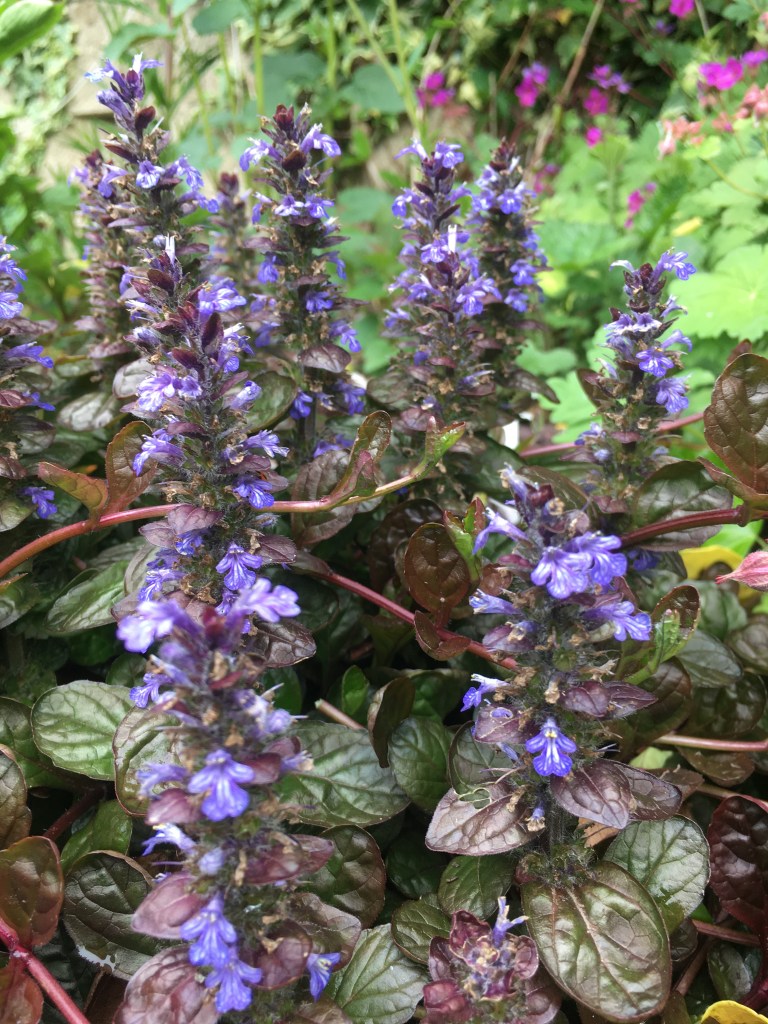
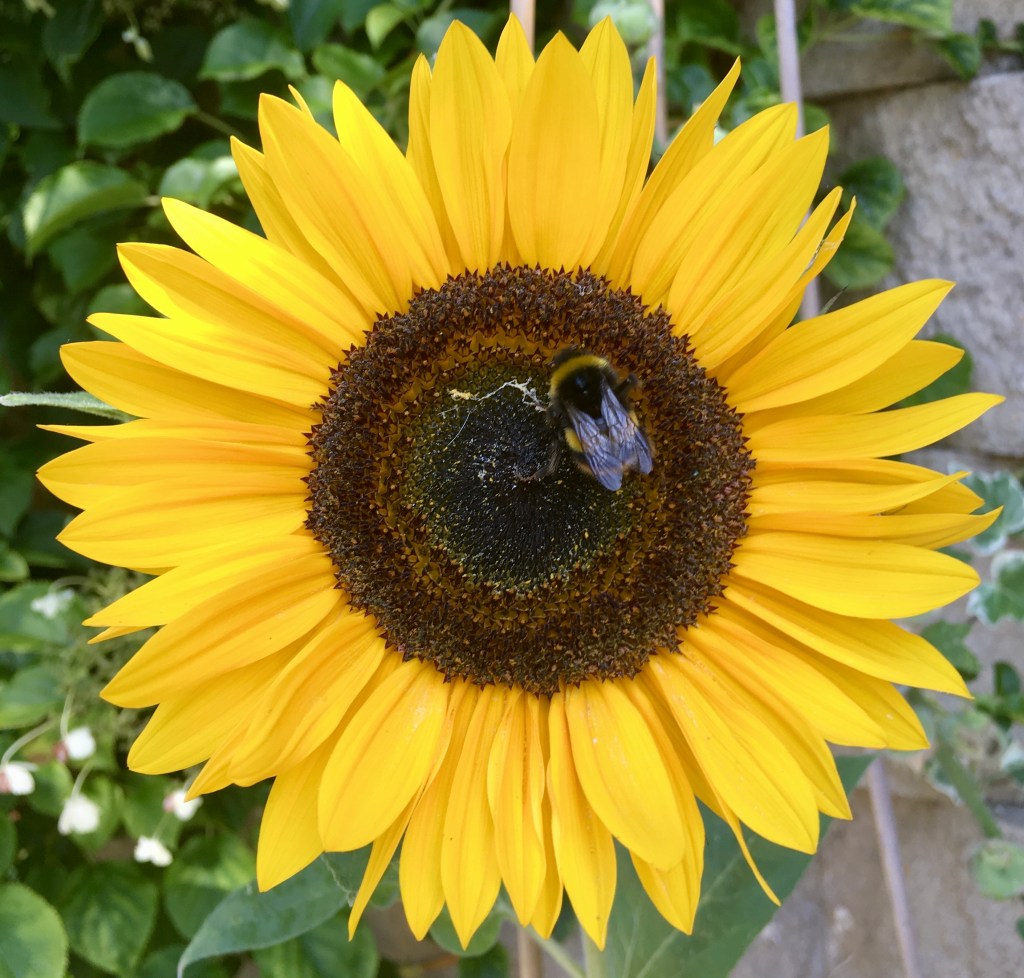
We’ve lost 97% of our flower-rich meadows in the UK since the 1930s. We can help reverse this catastrophic decline by growing more flowers for bees. Those of us with gardens can really help the plight of bees by devoting at least part of our outdoor space to bees. Even balconies and windowboxes can make a difference. A simple low-cost option is to buy a bee-friendly seedbomb or packet of wildflower seed mix and sow into a plant pot or border. For those who have more time/money/inclination it’s worth researching planting combinations to ensure you offer a wide variety of flower types. Certain bee species have short tongues and some are long-tongued so they prefer different flower varieties. It’s also important to provide flowering plants for all seasons. Bees forage from February round to October so the key is to provide a continuous source of nectar throughout the year. The most popular plants in my garden through the year are: Heather, Lungwort (Pulmonaria), Rosemary, Bugle (Ajuga reptans), Geranium, Chives, Lavender, Hyssop (Agastache Blackadder), Pincushion Scabious (Scabiosa Butterfly Blue), Sunflower, Hollyhock, Marjoram, Thyme, Dahlia (both Bishop of Llandaff and Mignon varieties) and Japanese Anemone. An important thing to consider when choosing plants is to select single-flowering varieties – avoid highly cultivated double flowering plants as pollinators struggle to access the pollen and nectar inside these. Also it’s better to prioritise native flowering plants and choose organically grown/peat free where possible.


2 Be lazy
Yes really! If you are lucky enough to have a garden one of the best things you can do for wildlife is be a bit lazy or messy. Leave a corner of your garden to go wild. Leave piles of logs lying around. Don’t pull up all the weeds. The quickest way to get rid of weeds is to relabel them wildflowers! If you have a lawn try stepping away from the mower and see what wildflowers grow in the long grass. If the thought of a whole lawn of long grass seems too extreme try leaving just a small patch.
3 Provide shelter
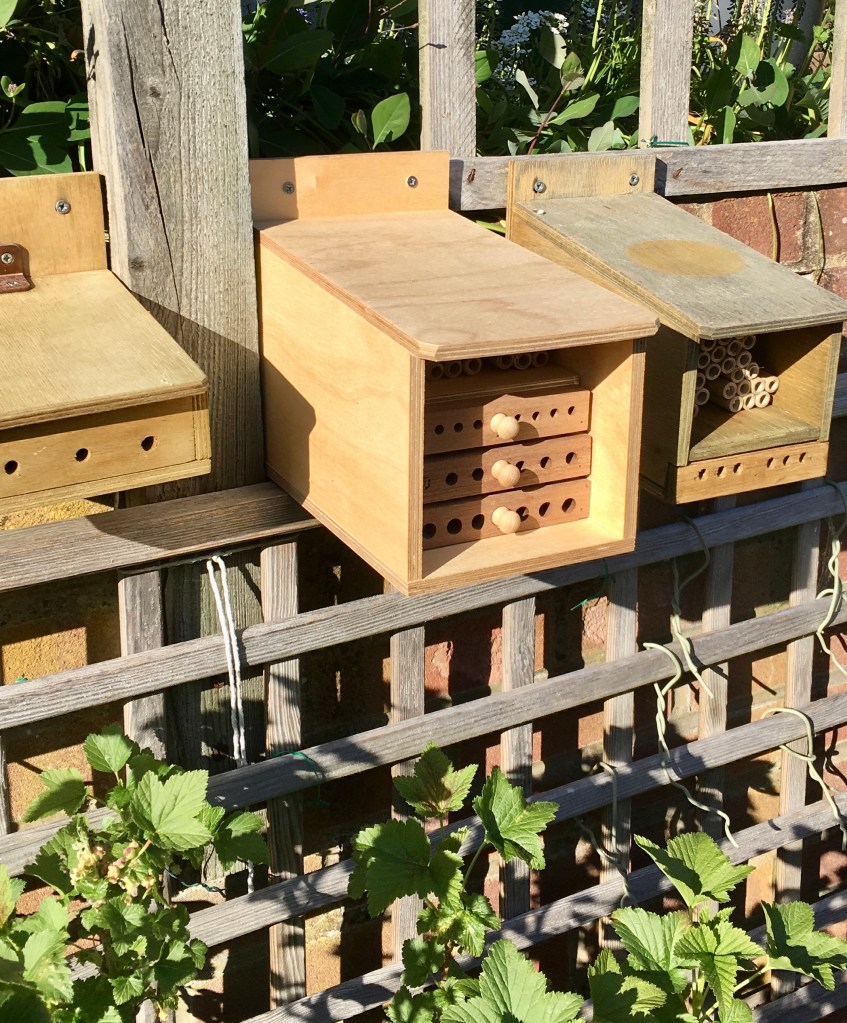
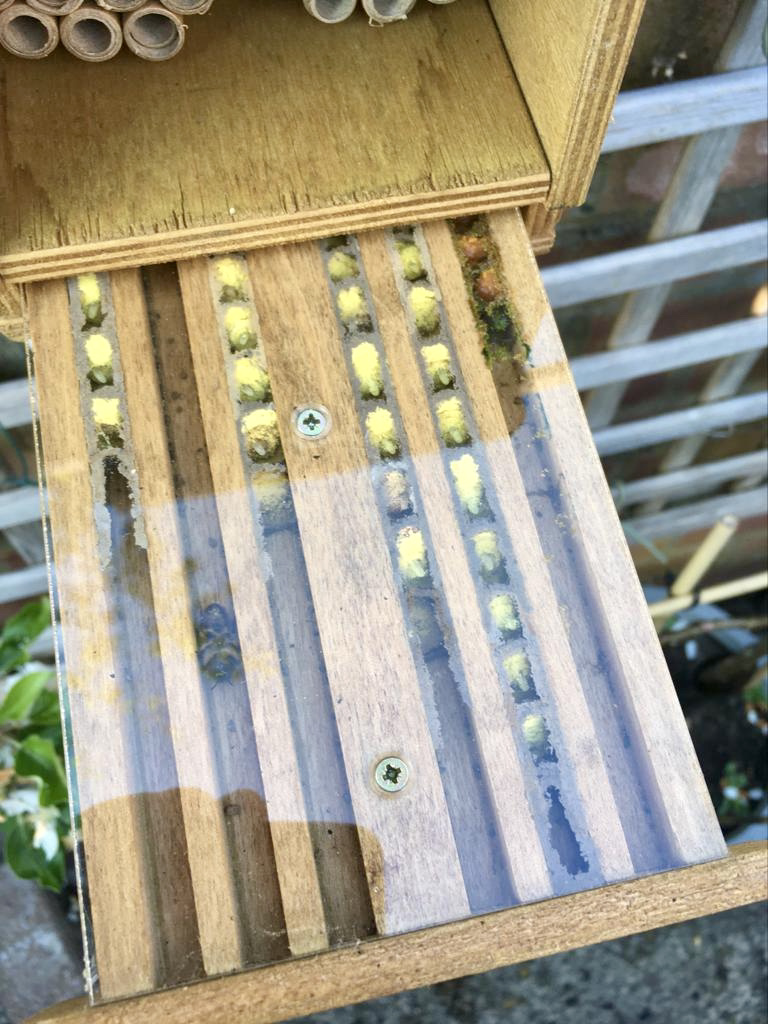
There are numerous bee hotels available for solitary bees both online and in garden centres. If you are looking to buy a hotel it’s good to bear a few things in mind. The holes ideally should be 6-10mm in diameter. Bees like to be snug inside the tubes so won’t be interested if they are too large. Tube length should be at least 15cm so each female bee has room to lay enough eggs. Beware of bamboo tubes with rough/sharp edges that could damage bee wings. It’s preferable to have a hotel with removable tubes. Hotels with fixed tubes quickly become bee death traps! Bees are susceptible to parasites and predation too so best practice is to remove tubes and equipment in autumn. Filled tubes can be overwintered in a shed or garage and the hotel can be cleaned ready for use again the following spring. I highly recommend MasonBees where I purchased my hotel. They even offer a Guardian scheme (I’m on my 2nd year now) which is a perfect introduction into managing solitary bees. They send you a supply of bee cocoons for release in spring and take back the filled tubes in autumn for screening and processing!

4 Water
Bees do require a supply of clean water so help them out! This can be as simple as a small saucer of water. If you already have a bird bath you can add a few pebbles/rocks to create a safe access point for them. If you’re feeling more adventurous try adding a pond to your garden. This will benefit all wildlife in your garden. Just make sure you create a shallow sloping section at one end to enable easy access.
5 Take Action!
Take the pledge to Bee The Change with the Bumblebee Conservation Trust
Stand up for nature. Sign this petition asking the prime minister to put nature’s recovery into law.
Sign this petition calling on the UK government to reduce pesticide use.
Sign up to the No Insectinction campaign and get free wildflower seeds (UK only) plus information and advice.
Recommended Reading
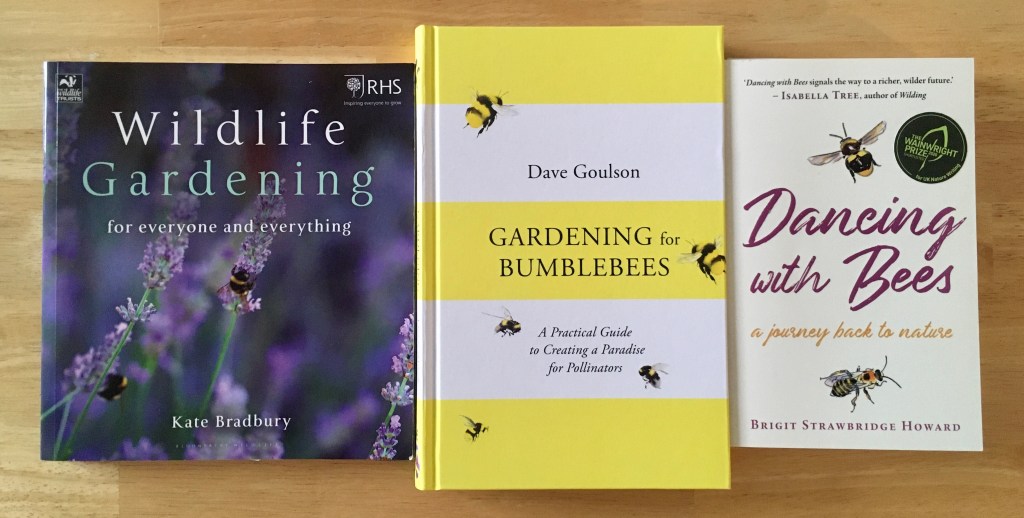
Gardening for Bumblebees by Dave Goulson – Prof. Dave Goulson specialises in the study of bumblebees and has written extensively about them. His latest book is packed full of information on creating a garden for pollinators with an in-depth section on the best plants to choose.
Wildlife Gardening by Kate Bradbury – a fantastic book full of practical advice on how to garden for wildlife with emphasis on bees, butterflies and birds.
Dancing with Bees by Brigit Strawbridge Howard – a wonderful personal account of Brigit’s journey of discovery into the world of bees. This book will make you fall in love with bees!
Resources
The Bumblebee Conservation Trust – charity specialising in ecology and conservation of bumblebees, promoting education and habitat creation.
Buglife – charity focusing on the conservation of invertebrates in the UK.
The Wildlife Trusts – charity focusing on protecting wildlife and wild spaces, raising awareness through education. Check out their interactive map to discover your closest nature reserve where you can connect with nature.
Mason Bees – supplier of bee equipment for solitary bees. They run the brilliant mason bee guardian scheme.
Nurturing Nature – supplier of bee boxes, wormeries and feeders.
Higgledy Garden – fabulous supplier of bee-friendly flower seeds and excellent blog with growing guides.
Naturescape – Supplier of British wildflowers (seeds, plants & bulbs), bareroot trees and hedging. Plus comprehensive information in their Wildflower growing guide.
Plantlife – British conservation charity working to save threatened wildflowers, plants and fungi.
I hope this post provides some useful information and inspiration on how we can all do our bit to protect bees and halt their decline. Certainly writing this post has reminded me what fascinating creatures bees are and what joy they bring to my life. I pledge to do all I can to protect and help bees and make my garden even more wildlife friendly. Even though I currently have a wide range of bee-friendly plants I plan to add more. I dream of a summer spent relaxing in my garden with a cup of tea (or G&T!) and a buzz in the air.
 Sitting in the Kitchen Sink
We have dandelions in the garden but it only grows in spring. Bees are very fond of this dandelion flower nectar. But here in my area, the Prosecco area, they spray a lot of pesticides and so now we see much less bees. The vineyards are all full of pesticides, the bees are dying but the farmers only think about money.
LikeLike
Hi Fairy Queen. Thanks for reading my blog! We have the same problem in the UK with pesticide use. Nature lovers like me have to regularly challenge the government to get pesticide use stopped. There are some farmers who work in harmony with nature and create wonderful spaces for wildlife to thrive. Sadly they are only a minority. As you say money talks.
LikeLiked by 1 person