I absolutely love all the BBC nature watches; Spring, Autumn and Winter. However Winterwatch always brings some added joy at a time when the weather keeps us indoors (in the northern hemisphere at least!). With 2 weeks of nightly programmes and the live cameras from 1pm there is so much to enjoy and learn. If you’ve missed out on any episodes you can catch up on the BBC iPlayer. I’ve particularly enjoyed the macro insights from Lucy Lapwing this year – seeing the beautiful secret wings of earwigs has certainly made me look at them in a new light!! I do feel more connected to nature when I watch these special programmes which is something we can all strive for. Feeling connected to nature reminds us of how important it is and how we must do all we can to protect it. If you feel inspired to connect with nature you can do that this weekend (27-29th Jan) by taking part in the Big Garden Birdwatch (UK). Just grab a cuppa and a slice of cake and spend 1 hour watching and counting birds!
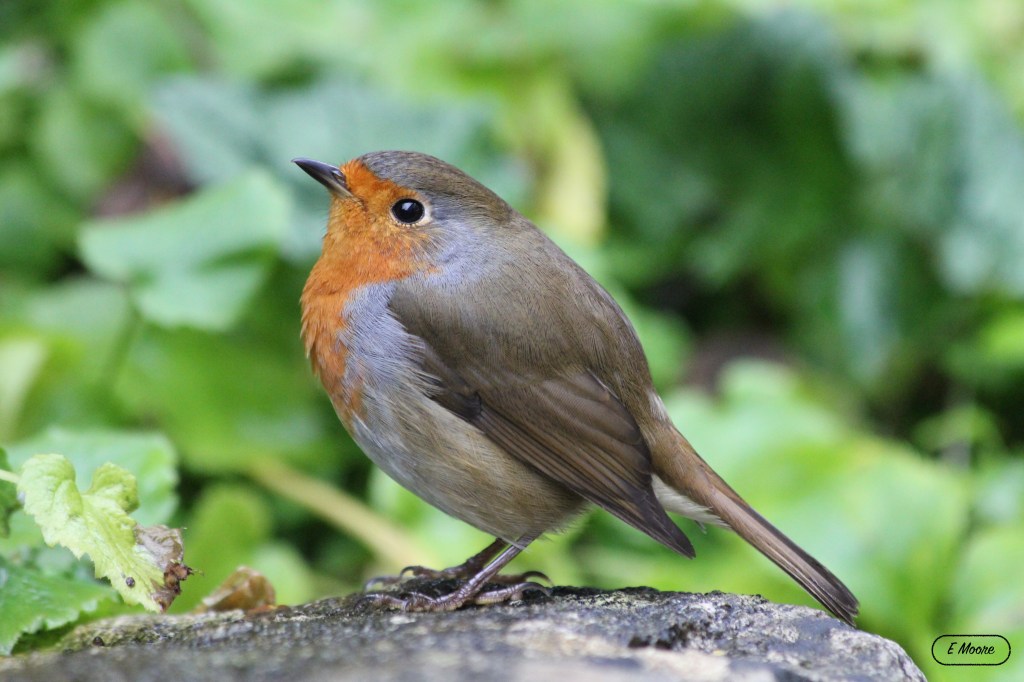
A regular Robin visitor to my garden
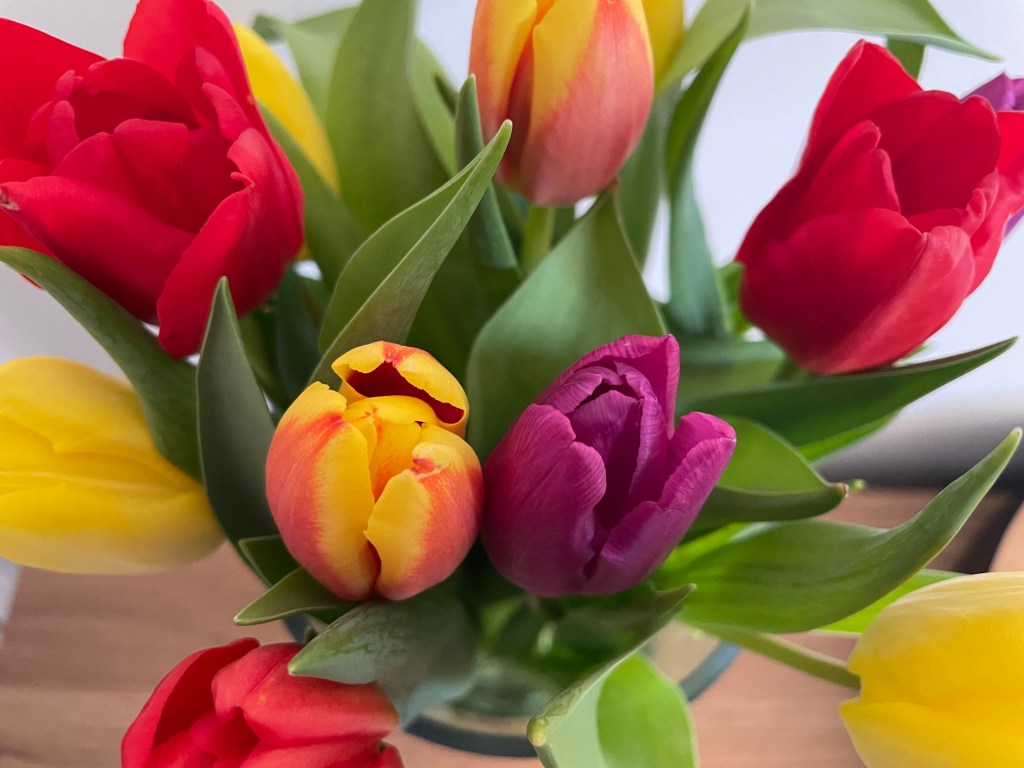
Tulips
The weather has just been so cold and gloomy that I decided to buy some bright tulips to bring some cheer. Just look at the vibrant colours here.
I’ve just finished reading this book as I really wanted to read it before the TV series comes out in March (Amazon Prime). It took me a while to get into the story as the format is different to most fiction I read. The story is about the rise and fall of fictional 70s rock band Daisy Jones and the Six. This is told through the eyes of the band members, management and family in the style of an interview reflecting on their experiences. Each character tells their part of the story which sometimes contradicts each other. It’s so interesting to see how people interpret events differently and the misundertandings that arise. Once I got used the style of this format and the story develops, I got more into the book. Overall it was very enjoyable and the format actually makes you feel like you are in the story with the band. I’m really interested to see how this translates to the screen!
I only discovered Yoga with Adriene on her YouTube channel during lockdown. To begin with I only dabbled in the occasional yoga session as I was a complete novice and some of the moves seemed very difficult to grasp. However over time I’ve come to feel more at ease with the postures and natural flow of movements. Adriene has such a calming way of teaching and her gorgeous dog Benji also makes a regular appearance in her videos which is an added bonus! She creates monthly yoga programmes that anyone can take part in. This year I decided to join in with her January 30 day challenge as I was curious to see what a regular yoga practice could do for my health and wellbeing. Obviously there are still some days left of the challenge however I’m so proud of myself for committing to it every day so far. There were some days when I felt too busy or too tired but I still made it a priority to get on the mat each day and without fail I felt better after I did it! There is such a wonderful community of people who take part and comment on the videos. It’s so comforting and inspiring to feel connected to other people around the world who are doing the challenge too! Regular yoga practise is definitely something I want to continue after January as I can feel the benefits. If you are considering yoga I absolutely recommend you check out Adrienes’ videos!
As usual my list of albums is not arranged in order of preference. Instead it’s listed chronologically, either based on album release date or when purchased! There are many more I could have included, however I prefer to focus solely on albums actually purchased and played on heavy rotation. Particular standouts for me are Beth Orton, Arctic Monkeys and Weyes Blood.
Cate le Bon – Pompeii
Widowspeak – The Jacket
Fontaines D.C. – Skinty Fia
Sharon Van Etten – We’ve Been Going About This All Wrong
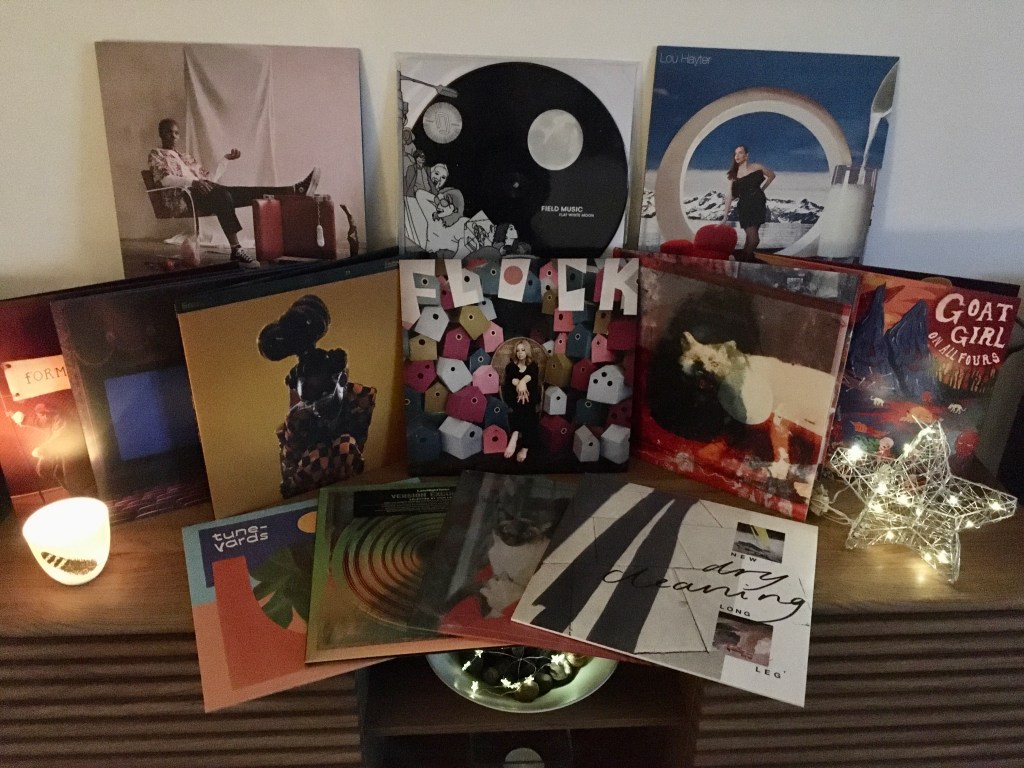
Well it’s certainly been a while since I last blogged. I feel that the pandemic has really affected my creativity. Sometimes I have a vague idea for a blogpost but then the idea quickly floats away on the breeze. So in the spirit of New Year Resolutions here I am making an effort to work through my creative block. I realise I failed to blog my top album list for 2020 oops! Anyway here is my list for 2021. I don’t like to rank them in order but I must just highlight a few in particular.
Little Simz must surely take the award for most heavily played record in our house this year. Epic and soaring – this album stopped my in my tracks from the 1st listen and repeated plays brings new discovery each time. No surprise it appeared in many year-end lists.
By contrast the Lou Hayter album seems to have slipped under the radar but it almost single-handedly got me through the summer. I listened to this daily whilst out in the garden tending to my veggies and creating my flower borders. This is pure 80s vibe feelgood pop and it gave me such joy in a year of continued pandemic-fuelled anxiety.
Field Music are firm favourites in our house and their latest album Flat White Moon is so fabulous I bought it twice! No seriously I have 2 copies – I mean who can resist a picture disc?! It always amazes me how the Brewis brothers manage to be so prolific yet also so creative and inventive with each new album. Flat White Moon is a real gem, full of quirky rhythms and catchy lyrics that worm their way into your brain.
Here’s the list in full:
Sometimes I Might Be Introvert by Little Simz
Private Sunshine by Lou Hayter
Flat White Moon by Field Music
Collapsed In Sunbeams by Arlo Parks
Flock by Jane Weaver
New Long Leg by Dry Cleaning
As The Love Continues by Mogwai
Already, Always by Bess Atwell
Home Video by Lucy Dacus
Former Things by Lonelady
Late Night Tales presents Version Excursion (selected by Don Letts) by Various
It’s time to talk bees. As I write this, the wind and rain is lashing against the window – is it really May? A quick flick through my photo library shows that this time last year we were enjoying sunny days relaxing in the garden watching bees going about their business. Today my garden is very low on bee activity although not totally devoid. I’ve just discovered that bumblebees are nesting in an old mouse hole in our rockery and I braved 20 mins outside this morning watching them come and go. I’m feeling honoured that they’ve chosen our garden to make their home!
When we think about bees most people generally think of bumblebees and honey bees. Yet studies show there are actually around 270 species in the UK and around 20,000 species in the world! Of these species, many are solitary meaning they don’t have a queen or a community nest/hive. They may nest adjacent to other solitary bees but they do not share parenting duties or create social hierarchies. Common solitary bees found in the UK include red mason bees, blue mason bees, leafcutter bees, ashy mining bees, tawny mining bees and the fantastically named hairy-footed flower bee!
So why do bees matter? 75% of global food crops rely on pollination. Bees and other pollinators perform this incredible job for us. They really help to put food on our plates! In fact studies show that solitary bees are more reliable pollinators for fruit trees than honeybees. We must do everything in our power to stop their decline. Hand-pollinating crops is costly and could result in rising food prices. Bees also help pollinate wildflowers which form part of the ecosystem for insects, birds and mammals. All lives are dependant on bees!
So what can we do to help?
1 Grow flowers for bees
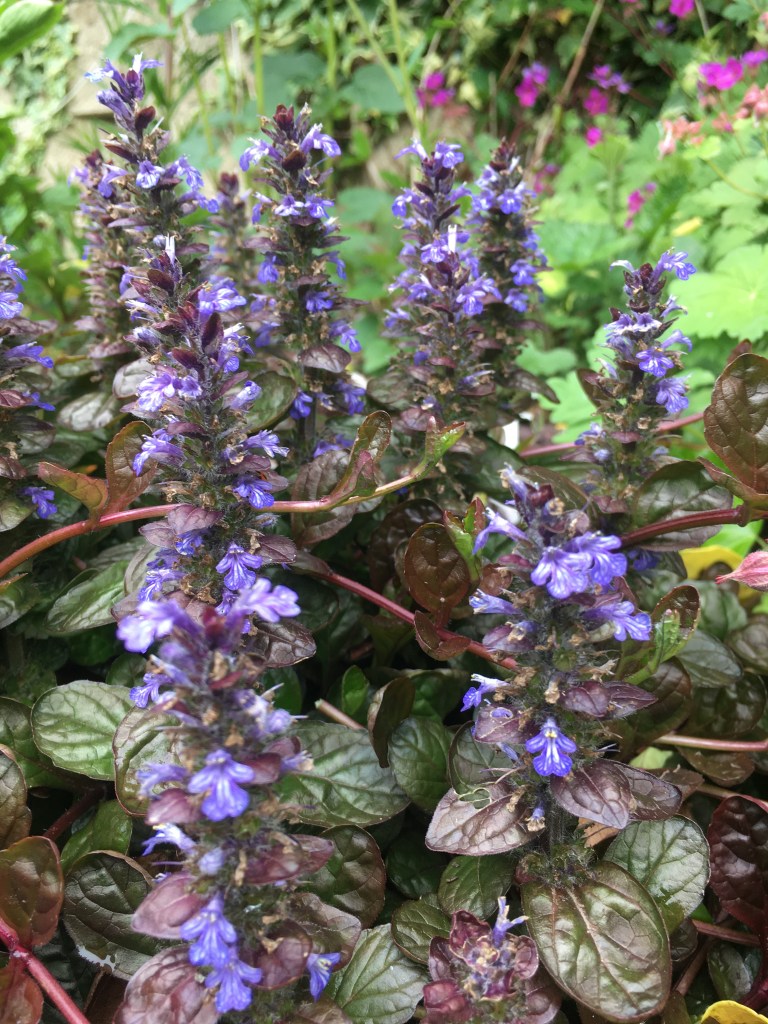
We’ve lost 97% of our flower-rich meadows in the UK since the 1930s. We can help reverse this catastrophic decline by growing more flowers for bees. Those of us with gardens can really help the plight of bees by devoting at least part of our outdoor space to bees. Even balconies and windowboxes can make a difference. A simple low-cost option is to buy a bee-friendly seedbomb or packet of wildflower seed mix and sow into a plant pot or border. For those who have more time/money/inclination it’s worth researching planting combinations to ensure you offer a wide variety of flower types. Certain bee species have short tongues and some are long-tongued so they prefer different flower varieties. It’s also important to provide flowering plants for all seasons. Bees forage from February round to October so the key is to provide a continuous source of nectar throughout the year. The most popular plants in my garden through the year are: Heather, Lungwort (Pulmonaria), Rosemary, Bugle (Ajuga reptans), Geranium, Chives, Lavender, Hyssop (Agastache Blackadder), Pincushion Scabious (Scabiosa Butterfly Blue), Sunflower, Hollyhock, Marjoram, Thyme, Dahlia (both Bishop of Llandaff and Mignon varieties) and Japanese Anemone. An important thing to consider when choosing plants is to select single-flowering varieties – avoid highly cultivated double flowering plants as pollinators struggle to access the pollen and nectar inside these. Also it’s better to prioritise native flowering plants and choose organically grown/peat free where possible.
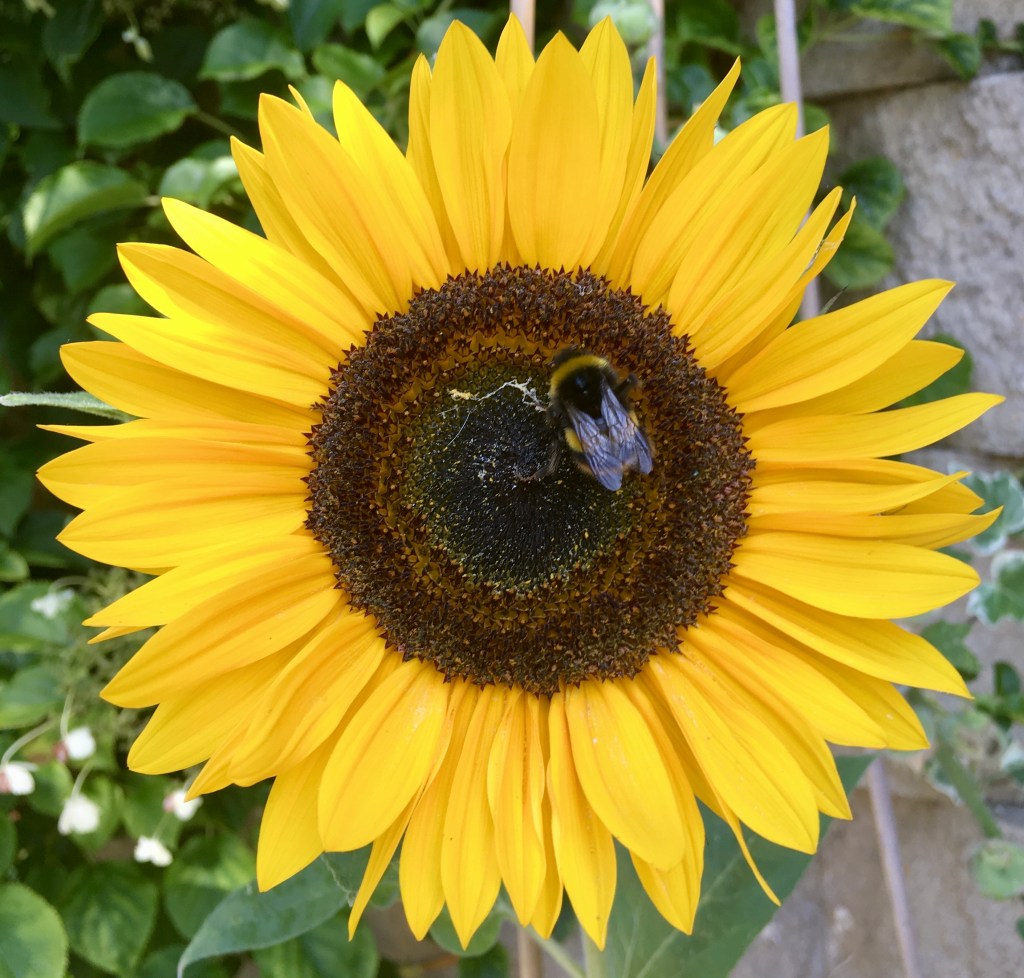
Ajuga ReptansSunflowerChivesScabiosaRosemary
2 Be lazy
Yes really! If you are lucky enough to have a garden one of the best things you can do for wildlife is be a bit lazy or messy. Leave a corner of your garden to go wild. Leave piles of logs lying around. Don’t pull up all the weeds. The quickest way to get rid of weeds is to relabel them wildflowers! If you have a lawn try stepping away from the mower and see what wildflowers grow in the long grass. If the thought of a whole lawn of long grass seems too extreme try leaving just a small patch.
3 Provide shelter
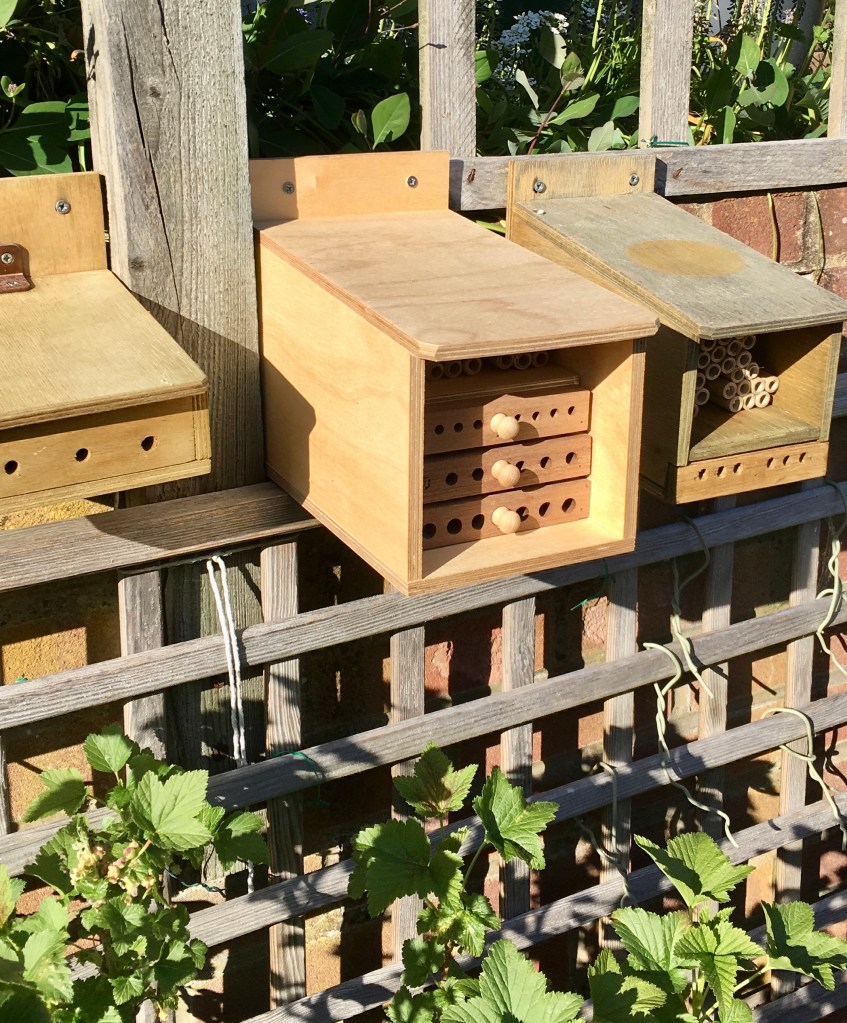
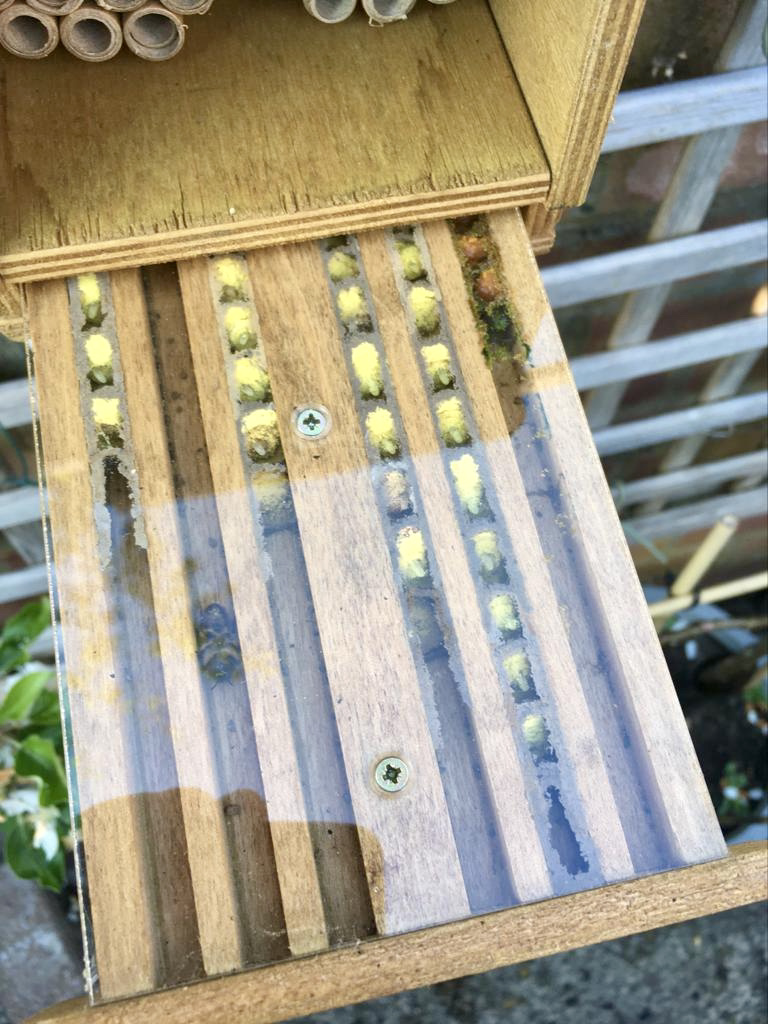
There are numerous bee hotels available for solitary bees both online and in garden centres. If you are looking to buy a hotel it’s good to bear a few things in mind. The holes ideally should be 6-10mm in diameter. Bees like to be snug inside the tubes so won’t be interested if they are too large. Tube length should be at least 15cm so each female bee has room to lay enough eggs. Beware of bamboo tubes with rough/sharp edges that could damage bee wings. It’s preferable to have a hotel with removable tubes. Hotels with fixed tubes quickly become bee death traps! Bees are susceptible to parasites and predation too so best practice is to remove tubes and equipment in autumn. Filled tubes can be overwintered in a shed or garage and the hotel can be cleaned ready for use again the following spring. I highly recommend MasonBees where I purchased my hotel. They even offer a Guardian scheme (I’m on my 2nd year now) which is a perfect introduction into managing solitary bees. They send you a supply of bee cocoons for release in spring and take back the filled tubes in autumn for screening and processing!
Solitary bee lodges with release boxObservation drawer filling upRed mason bee resting on cardboard tubes
4 Water
Bees do require a supply of clean water so help them out! This can be as simple as a small saucer of water. If you already have a bird bath you can add a few pebbles/rocks to create a safe access point for them. If you’re feeling more adventurous try adding a pond to your garden. This will benefit all wildlife in your garden. Just make sure you create a shallow sloping section at one end to enable easy access.
5 Take Action!
Take the pledge to Bee The Change with the Bumblebee Conservation Trust
Stand up for nature. Sign this petition asking the prime minister to put nature’s recovery into law.
Sign this petition calling on the UK government to reduce pesticide use.
Sign up to the No Insectinction campaign and get free wildflower seeds (UK only) plus information and advice.
Recommended Reading
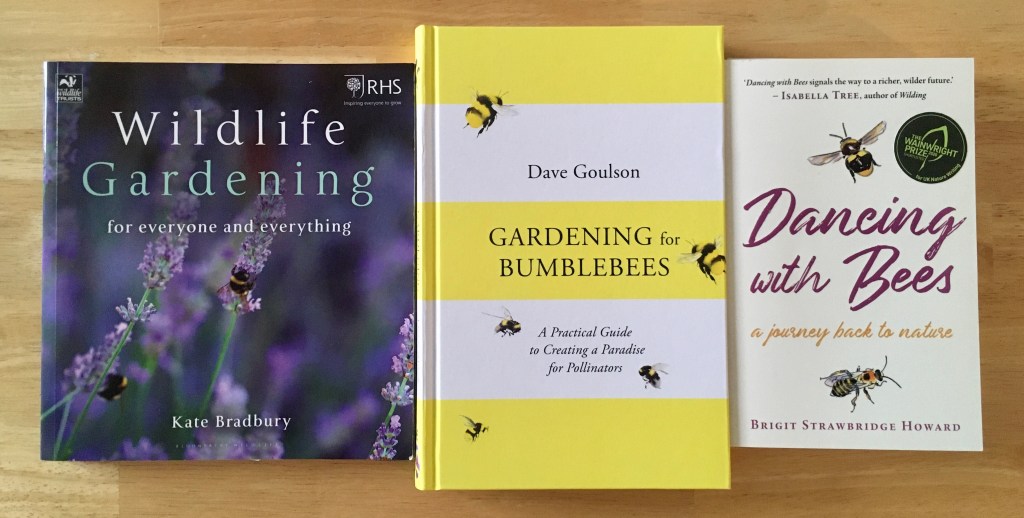
Gardening for Bumblebees by Dave Goulson – Prof. Dave Goulson specialises in the study of bumblebees and has written extensively about them. His latest book is packed full of information on creating a garden for pollinators with an in-depth section on the best plants to choose.
Wildlife Gardening by Kate Bradbury – a fantastic book full of practical advice on how to garden for wildlife with emphasis on bees, butterflies and birds.
Dancing with Bees by Brigit Strawbridge Howard – a wonderful personal account of Brigit’s journey of discovery into the world of bees. This book will make you fall in love with bees!
Resources
The Bumblebee Conservation Trust – charity specialising in ecology and conservation of bumblebees, promoting education and habitat creation.
Buglife – charity focusing on the conservation of invertebrates in the UK.
The Wildlife Trusts – charity focusing on protecting wildlife and wild spaces, raising awareness through education. Check out their interactive map to discover your closest nature reserve where you can connect with nature.
Mason Bees – supplier of bee equipment for solitary bees. They run the brilliant mason bee guardian scheme.
Nurturing Nature – supplier of bee boxes, wormeries and feeders.
Higgledy Garden – fabulous supplier of bee-friendly flower seeds and excellent blog with growing guides.
Naturescape – Supplier of British wildflowers (seeds, plants & bulbs), bareroot trees and hedging. Plus comprehensive information in their Wildflower growing guide.
Plantlife – British conservation charity working to save threatened wildflowers, plants and fungi.
I hope this post provides some useful information and inspiration on how we can all do our bit to protect bees and halt their decline. Certainly writing this post has reminded me what fascinating creatures bees are and what joy they bring to my life. I pledge to do all I can to protect and help bees and make my garden even more wildlife friendly. Even though I currently have a wide range of bee-friendly plants I plan to add more. I dream of a summer spent relaxing in my garden with a cup of tea (or G&T!) and a buzz in the air.
We are big marmalade lovers in our house and whilst we enjoy trying out different brands of marmalade, nothing beats homemade. 2 years ago I tried making my own for the first time and the flavour was just incredible. January is the time of year when Seville oranges hit the shelves in the UK shops. So when I spotted them in my local supermarket this week, I knew I had to grab them and embrace my inner Paddington. So here is the recipe I follow:
Ingredients
1kg Seville Oranges
1 Unwaxed Lemon
2 litres water
2kg Sugar
You will also need the following equipment: Large saucepan (I use this fabulous Maslin pan from Lakeland), Sieve, Muslin square (again Lakeland are a great source), good quality knife and chopping board, Citrus juicer or reamer, Jars (approx 6 x 340g jars – I save and reuse old jam jars).
Please note this recipe takes 2 days due to the overnight soaking. This increases pectin levels and helps the setting.
Method
Wash and dry the fruit.
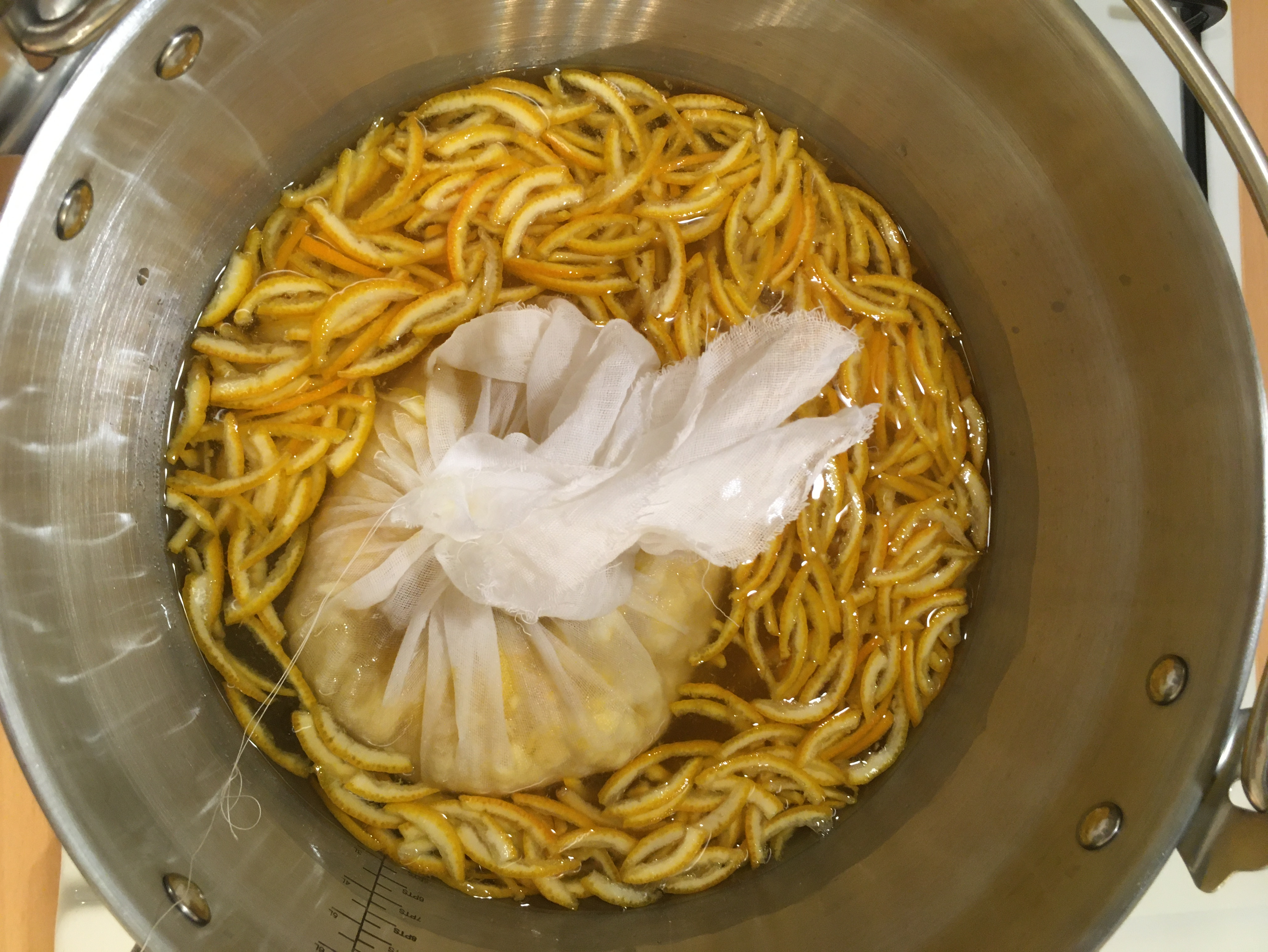
Cut the oranges in half and juice – add the juice to the pan. Scrape out all pips and pith from the juiced orange halves and place in the centre of the muslin square. I find a combination of teaspoon and fingers works best. Then using a sharp knife cut the orange shells into strips approx the size of matchsticks. How thick you make them depends on personal taste – I like them fairy thin. Add the cut peel strips to the pan.
Cut the lemon in half and juice – add this juice to the pan. Then cut the lemon shells in half again and add them to the centre of the muslin square. Draw up the corners of the muslin square to form a pouch and tie ( I use white cotton to tie).
Add 2 litres of cold water to the pan and then submerge the muslin pouch in the water/juice mix – leave overnight to soak.
The next day bring the pan of juice/water and muslin pouch to boil and then simmer for approx 2 hours. I noted the volume markings on the inside of my maslin pan. The volume was 3 litres to begin and had decreased to 2 litres after simmering.
Whilst the pan is simmering make sure you sterilise the jars and lids throughly to avoid mould. You can either put the jars through a dishwasher cycle; or pour boiling water into the jars and dry with a clean tea towel; or handwash in warm soapy water and dry with a clean tea towel, then put into the oven for 10 mins at 140C/120C fan/Gas mark 1.
Now it’s time to remove the muslin pouch. Place in a sieve over a bowl and squeeze out as much juice as you can, add the squeezed juice back to the pan. You could use a wooden spoon to squeeze but I personally find a pair of tongs to be much more effective. This step is really important so do not skimp here as the pectin levels will really help with the setting of the marmalade. When I first made marmalade I didn’t pay much attention to the squeezing and subsequently I struggled with the setting. So be warned!
Place 2 small saucers into the freezer to use later for testing the setting.
Next add the sugar to the pan. You may wish to experiment with using different types of sugar as this will give different flavour results. Granulated sugar or preserving sugar are usually the best starting point here. Avoid caster sugar as this dissolves too quickly. White sugar gives a clear, bright finish while golden sugar results in a darker marmalade with more complex caramel flavours. This year I’ve experimented with half white and half golden granulated and I’ve found the resulting flavour to be much more rounded. It all comes down to personal taste! A good tip is to warm the sugar in the oven before adding to the pan. Spread the sugar out over baking trays and warm for 10 mins at 140C/120C fan/Gas mark 1. Once you have added the sugar keep on a low heat and stir until the sugar has dissolved. Then increase the heat and bring to boil. Keep at a rolling boil for approx 15 mins until set. I like to use a jam thermometer to check the marmalade is at setting point (105C). Skim off any foam.
Now test the marmalade has set by performing the wrinkle test. Pour a spoonful of the marmalade onto one of your chilled plates and leaving for a few seconds. Then drag your finger through the marmalade – if it wrinkles it is set! If it seems too runny you can boil the pan for another 5 mins and retest with your 2nd chilled plate.
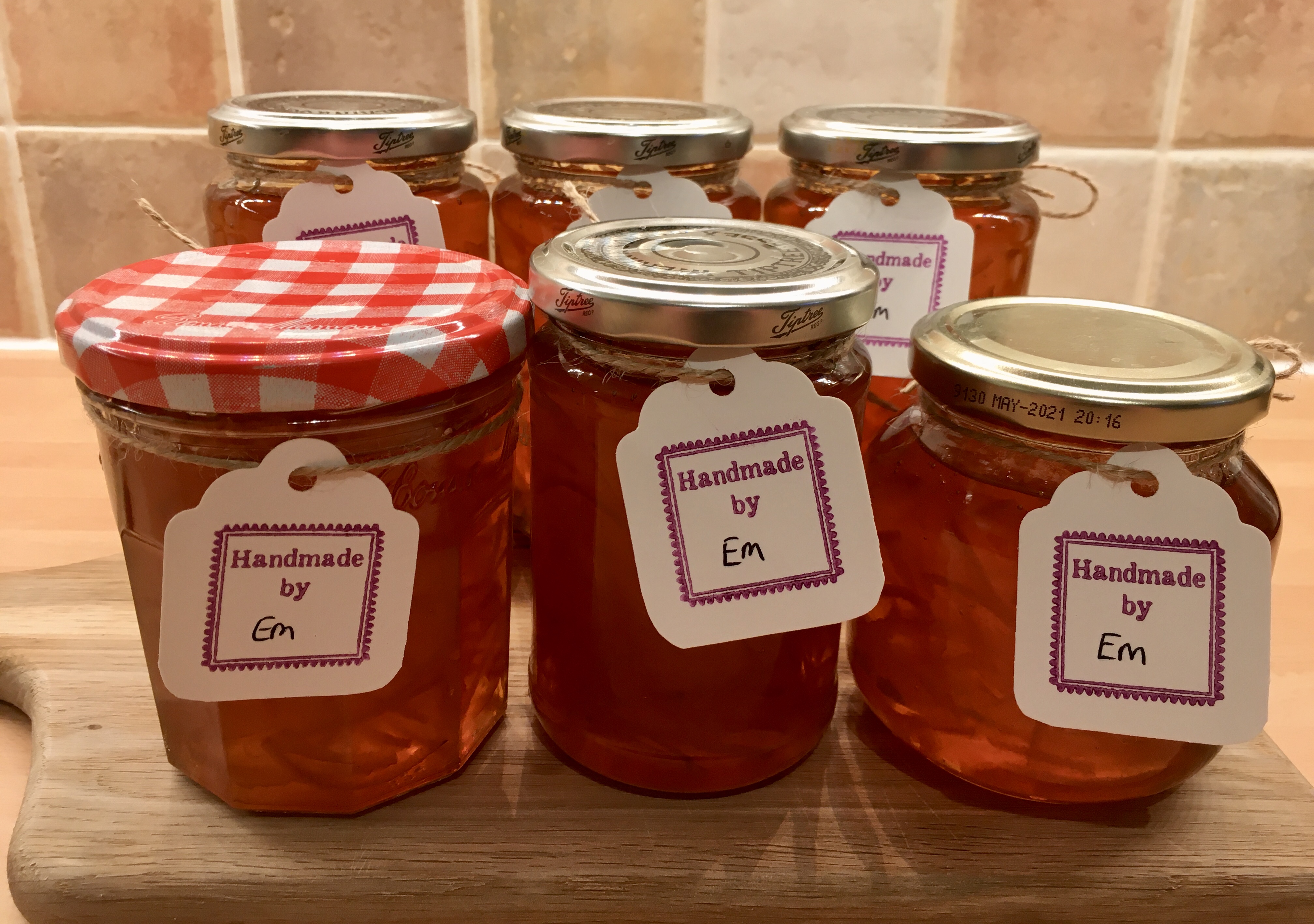
Once you are happy with the setting and you have skimmed all foam from the surface, leave the marmalade to cool in the pan – approx 15 mins. Then you can fill up your sterilised jars and cover with waxed discs. Seal tightly with lids once cool. Store in a cool, dry place out of sunlight – it should keep for up to 12 months. Once opened refrigerate and use within 1 month.
I’m a bit late posting this (I know!), I really hoped to get this posted before the end of the year. However, Christmas combined with crazy house decorating (upside down living and frantic glosswork) took their toll. So here’s my list of musical gems for 2019 (in order of release). Better late than never…
It’s been a while since I last blogged. I spent a lot of the summer tending the vegetables in our garden and making a start on decorating our house. Am feeling fairly happy with the progress so far but now wondering where the time went!
Well Autumn is now officially here and the weather has taken a cold turn – yes we finally cracked this morning and put the heating on! I started to reminisce about the warm summer days and our holiday road trip around the South of England. So I thought I’d do a review of our trip and the places we stayed and visited.
We started our trip visiting friends near Redruth, Cornwall. Such a relaxing way to start the holiday catching up on news and enjoying excellent food and the odd local gin/ale too. They are currently busy building a ‘Cabin-in-the-Woods’ on their land for holiday rental. So hopefully once completed we’ll be able to test it out and I can do another review.
From there we headed up to the north Cornish coast to St Agnes. We enjoyed a delicious lunch at Canteen – a simple concept, they offer just 1 meat and 1 veggie dish each lunchtime for £5. The lunch menu changes daily using fresh locally sourced food. Oh and I can confirm the cinnamon buns (from Da Bara bakery) are to die for! Canteen is rightly very popular so just make sure you get there early to avoid disappointment.
St Agnes Heritage Coast
We spent the night in Padstow at Rick Steins Seafood Restaurant. As it was peak holiday season Padstow harbour was very busy, so after ambling around the shops we sought solace in Ruby’s Bar. We found a cosy spot to relax with G&T’s before dinner. We dined in the Seafood Restaurant which was very busy, as expected, but the service and food was excellent. We stayed overnight (rooms are above the restaurant) and treated ourselves to an Estuary room as it was our anniversary. The room was styled beautifully, the bed was super comfy and the bathroom was big. The front desk staff were so friendly and helpful and they even provided a welcome gift of fresh strawberries & cream – a thoughtful touch. Special mention too for the fluffy pancakes and berry compote I enjoyed for breakfast in the morning!
Ruby’s Bar, Padstow
View across Padstow estuary
The next stop on our road trip was Devon. After stocking up on supplies in Tiverton we headed to nearby Rackenford village to stay in an eco cabin at the Bulworthy Project. We met the friendly owners Anna & Pete for the cabin keys and info. Pete gave us a wonderful guided tour of the woods which I highly recommend. He told us all about how they have transformed the woodland and created a special place for their charcoal making business. Pete’s knowledge of fungi is also incredible – there are some really interesting species to be found on their land. The cabin was well equipped with comfy bed, ensuite bathroom, kitchen area and wood burning stove. The stove creates the hot water to serve the shower and kitchen sink. Lighting is powered by solar. There are no traditional sockets (so don’t bother to bring a hairdryer!) but there is WiFi and a USB charging point for phones. So think Off-Grid but with benefits! Anna & Pete had kindly provided a bag of charcoal so we made full use of the BBQ – we agreed it was the best charcoal we’ve ever used. They also gave us a bottle of homemade Woodland wine which went down a little too well – a very potent tipple and so delicious! We really enjoyed our stay at Bulworthy and would love to return.
Devon hedgebank pathway
Bulworthy Eco cabin
After Devon we headed into Wiltshire to the Beckford Arms. This is a country pub with rooms set in the beautiful Fonthill Estate. We began our stay with a cream tea on the terrace outside. The scones came with some really incredible berry compote although we did attract the attention of a few wasps! Our room was very comfortable and the bathroom was well stocked with gorgeous Bramley products. The dinner menu was excellent – a great mix of well-executed pub classics like Fish & Chips and Steak and also more inventive dishes. The breakfasts were also excellent – the Full English was especially good with high quality ingredients like Marmalade sausages. The Beckford Arms is perfectly positioned for day trips. Whilst there we visited Stourhead House NT, Old Wardour Castle ruins, Messums Art gallery and also enjoyed a walk around the Fonthill Estate. We also took a trip to the Prince Leopold Inn in Upton Lovell a village near Warminster. The beer garden backs onto the idyllic River Wylye which is gently flowing and such a peaceful spot to while away a few hours. We enjoyed lunch and some excellent local beer.
Stourhead House National Trust
Old Wardour Castle
Prince Leopold Inn beer garden
Sadly this was the final place on our road trip – we really didn’t want to head home! This holiday was so relaxing and varied and allowed us to make the most of the UK countryside and connect with nature. Hopefully this will inspire you if you’re planning a visit to the south-west of England. Maybe you have recommendations too, I’d love to hear your travel tips!
I love Springwatch! It’s a real favourite in our house, though is it just me or does it seem to hit our screens later and later each year? Anyway no matter, I love the drama of the nature stories that unfold over the series. The fledglings, the quirky creatures, the ideas to inspire you to get outside into nature, the useful info highlighting the challenges facing our natural world and what steps we can take to protect and preserve. This series I’ve particularly loved the feature on Kate Bradbury turning her garden into a haven for wildlife. It’s made me really question our garden and what we can do to improve it for wildlife. Lately I’ve spent a lot of time studying our back garden and I’ve been able to observe the variety of wildlife already using our patch. We’ve got the obvious birds Robin, Blackbird, House Sparrow, Blue Tit, Great Tit, Coal Tit, Long-tailed Tit. However we’ve also seen Wren, Jay, Goldfinch, Woodpecker, Nuthatch and this week for the 1st time ever a Thrush! Not too shabby hey?! Plus we also spotted fledgling blue tits hopping around the garden – too cute to resist taking a few pics!
Any news of new material from the Brewis brothers (aka Field Music) is met with great excitement in our house. So it was with great joy that I woke on Thursday morning to hear that David Brewis has released a brand new album with his School of Language project. Called ’45’ it’s a concept album about the 45th US president (yes the orange one who won’t be named here) Seriously funky basslines combined with the usual thought-provoking and witty lyrics – I think it’s safe to say this will be on heavy rotation in our house over the coming months. It’s out now to stream via your platform of choice and the physical version is coming on 26th July (yellow vinyl people… just saying).
I’ve been really getting into podcasts lately and the Deliciously Ella podcast is fantastic. Whether you follow a plant-based lifestyle or not, we can all learn something from the ideas explored in these episodes. Covering a wide variety of topics from Food Waste, Mental Health, Gut Health, Sustainable Fashion, Stress and many more. These episodes are really thought-provoking whilst also offering practical advice. I always come away from listening feeling really positive and empowered to make simple changes however small.
Gardening
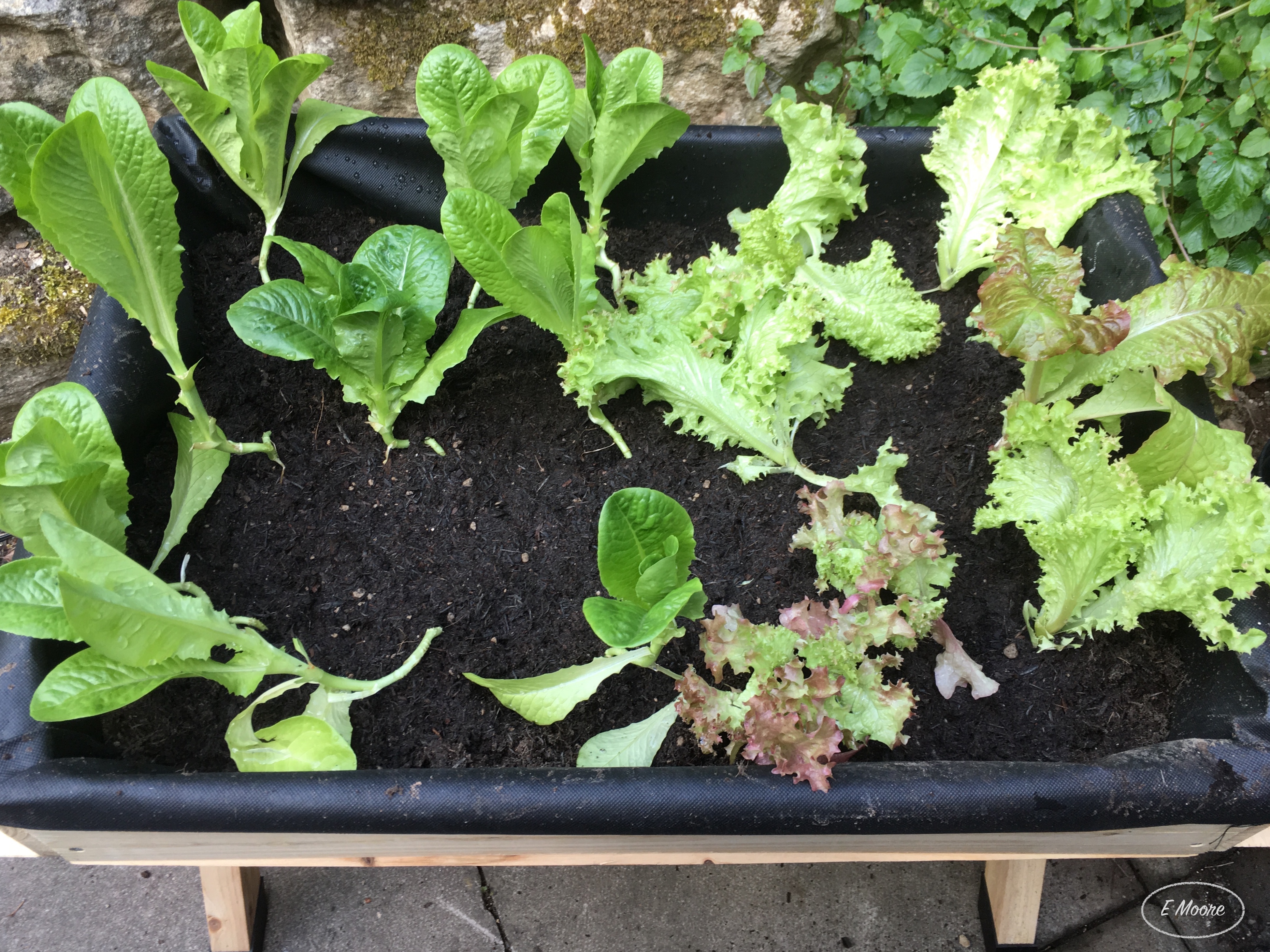
I’ve been able to spend more time in the garden lately and I’m beginning to see real signs of progress. My current mantra is ‘Progress not Perfection’ as I have a tendency to get despondent when things aren’t completed immediately. So I’m forcing myself to challenge this viewpoint – give myself a break and celebrate the small victories. So this week I’m pleased to celebrate planting my courgettes outside (grown from seed) and completing and filling my new veg trug with lettuce plants (kindly donated by my friends at Little Menherion).
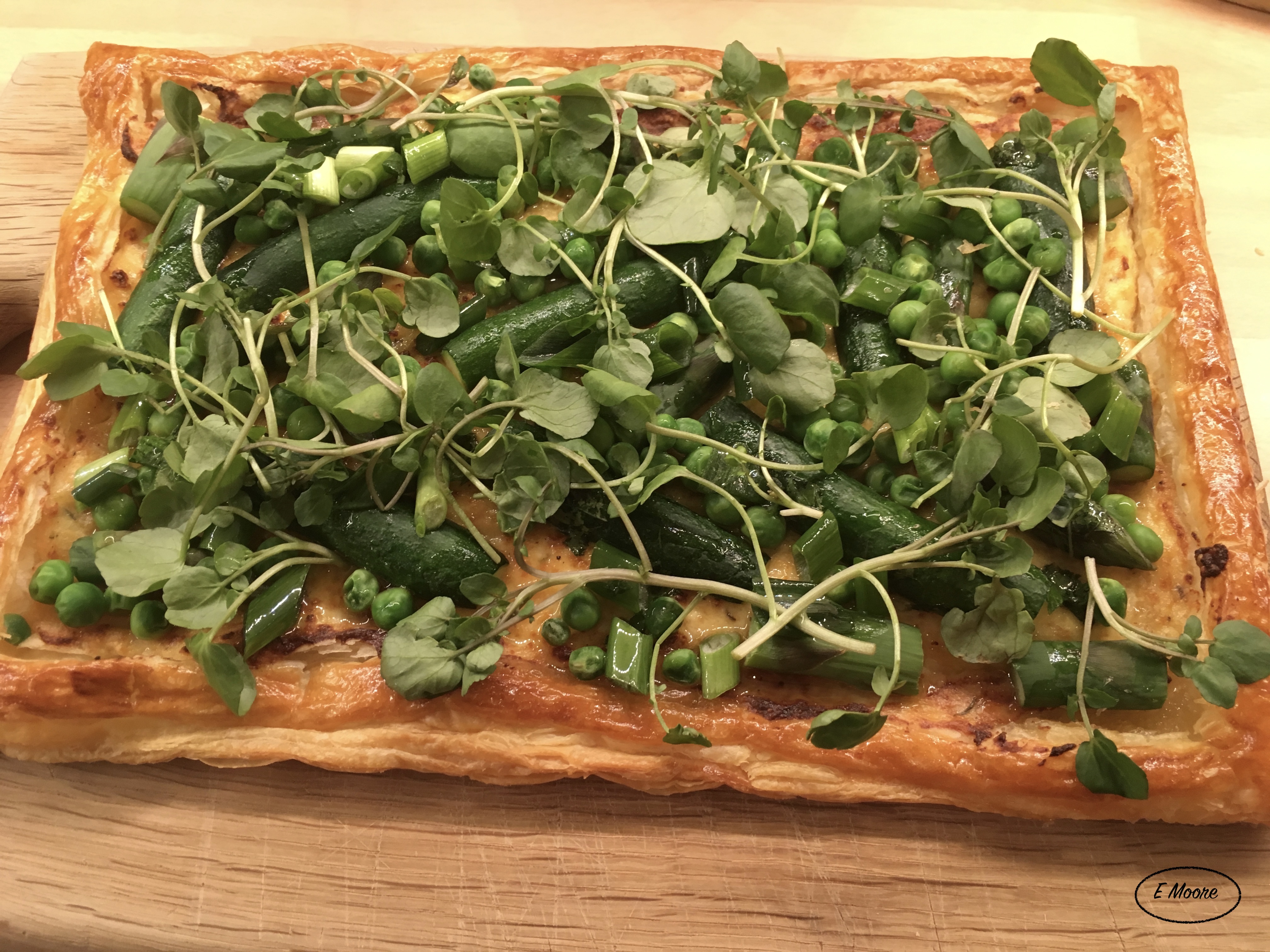
I don’t know about you but I definitely find myself craving more fresh, light and simple meals at this time of year. So I was excited to try out this recipe from Olive magazine. It uses ready rolled puff pastry which makes it really easy to make. The recipe uses asparagus and peas but obviously you can alter it to use whatever spring veg is in season (I used baby courgettes). The ricotta adds a real creaminess and the dressing is so delicious and zingy that it really enhances the freshness of the veg. I served the tart with buttery jersey royal potatoes tossed with chives and a simple salad.
I was so happy that the new series started back on Netflix this week. I started watching this tv show one day out of curiosity, while my husband was out on a bike ride. I quickly got hooked after a few episodes. Then he decided to join in watching with me, also got hooked and ended up having to go back to watch from the start! It’s just the best mix of crazy storyline, laugh-out-loud moments and fabulous characters (I think Janet is my fave). Who knew a series about Philosophy could be so fun! If you’ve never watched it, what the fork are you waiting for?
I’ve just finished this book and it’s the most gorgeous heart-warming story I’ve read in a long time. It’s the story of Satoru and his cat Nana. It explores the themes of friendship, family and belonging. My brain was really frazzled this week and this book was just the perfect antidote to soothe me.
Flowers
Decided to treat myself to these colourful roses on Friday to reward myself after a difficult week.
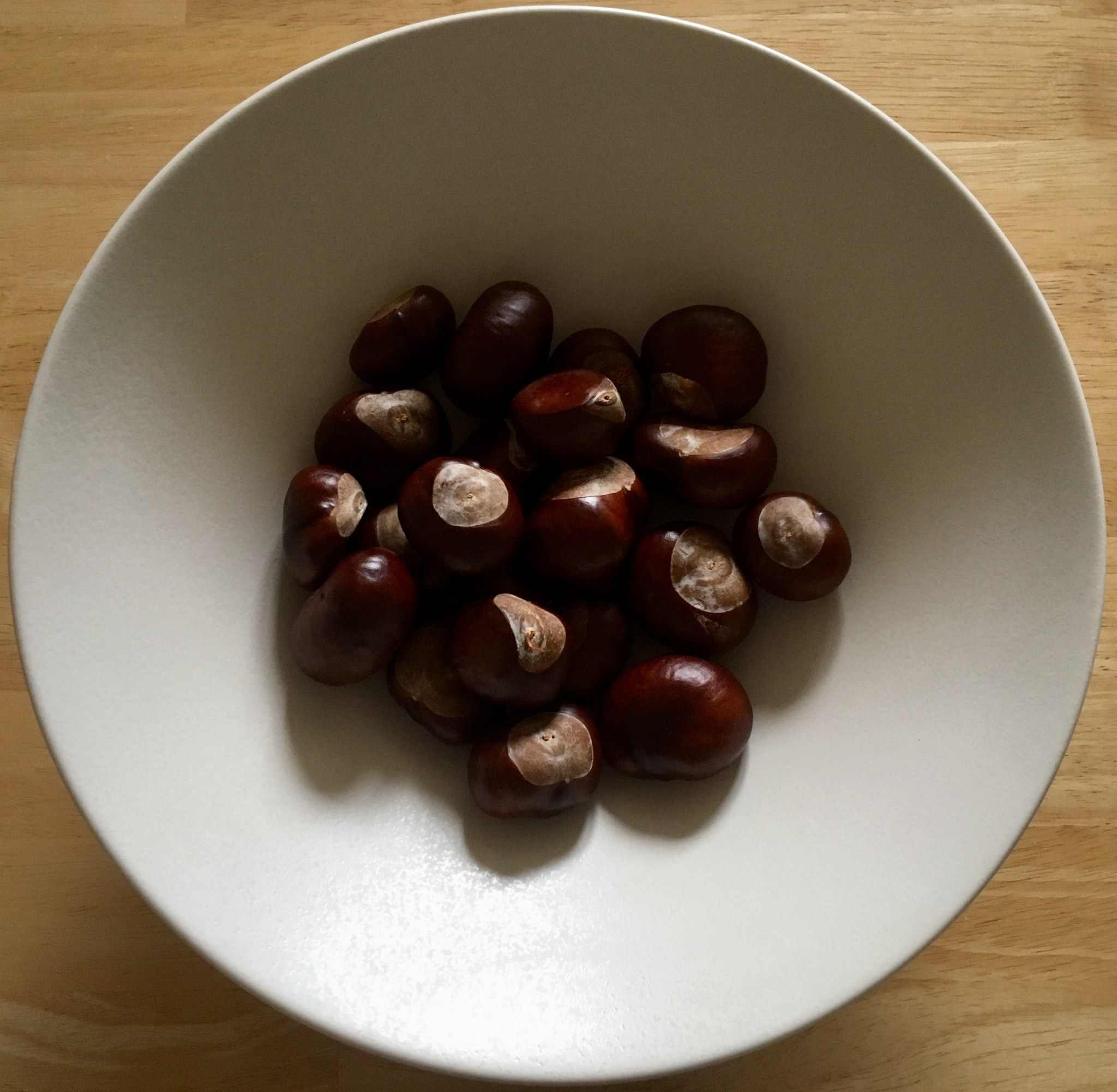
Conkers
My husband brought back all these amazing conkers for me. He collected them whilst out on a bike ride. They are just the epitome of autumn for me and I like to think they keep away the spiders so I scatter them all over the house!
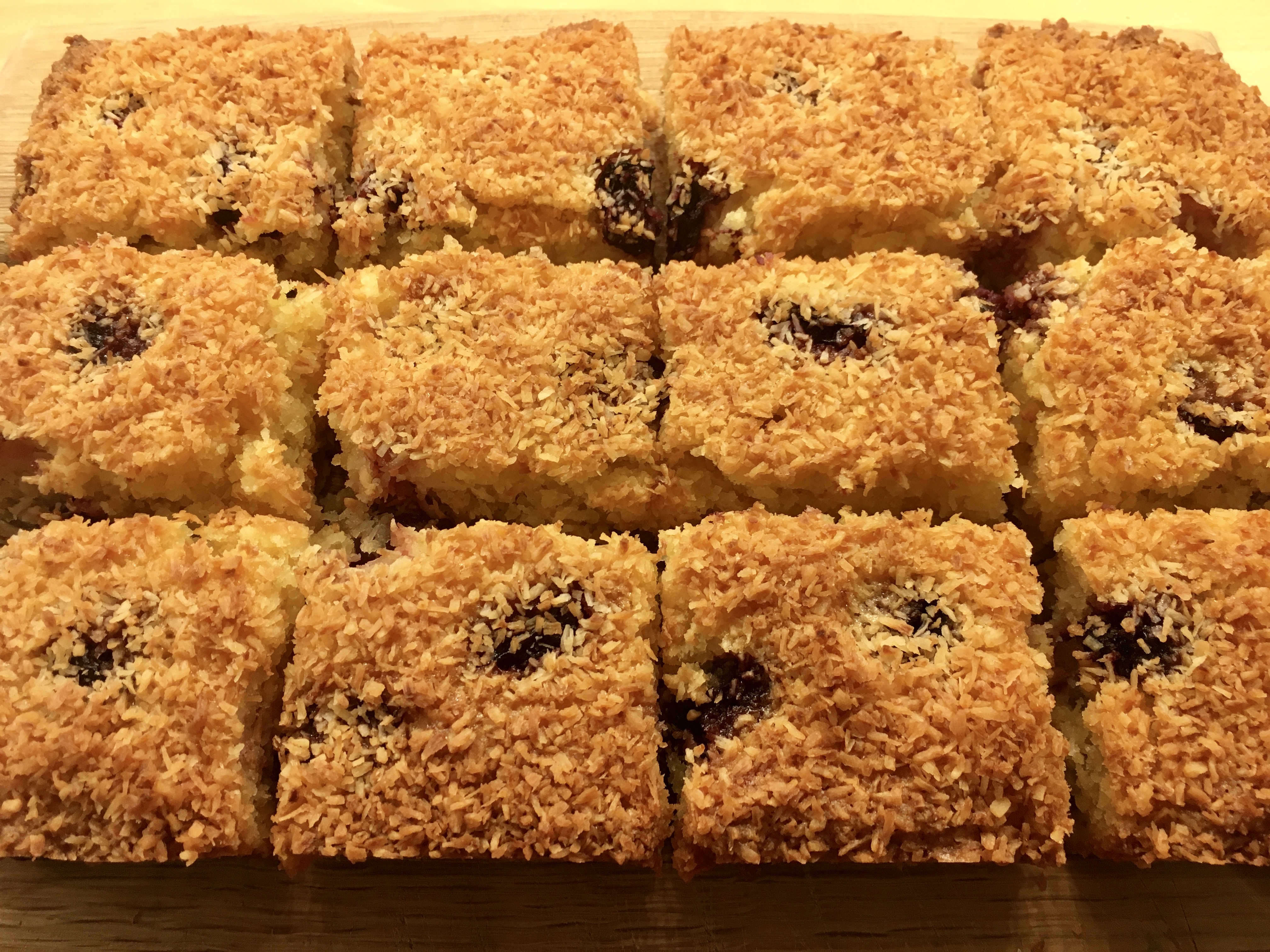
Baking
Nothing relaxes and grounds me quite like a spot of baking. I got out of the habit of it in summer. With the heatwave we had here in the UK the thought of having the oven on was just too much! So since the weather has turned cooler I’ve been more inspired to get my bake on. This week I had a go at making these Black Cherry and Coconut Bakewell Slices (recipe from Olive magazine). For a 1st attempt I think they turned out pretty good. My husband is a big cherry fan so am sure I’ll be making this one again.











 Sitting in the Kitchen Sink